Bhive: Crafting a personalised AI haircare app that kept users coming back with a 73% return rate & 12 min average time in-app.
Bhive is an AI-powered personalised haircare web app exploring how intelligent product matching can improve product discovery in a saturated e-commerce market.
Business context
The haircare market was saturated with choice but low on clarity. E-commerce platforms offered thousands of products, yet discovery was largely driven by generic categories and bold and inaccurate marketing claims.
Consumers increasingly relied on reviews, but these were unstructured and difficult to apply to individual hair needs. Bhive was created to explore whether product discovery could be driven by relevance and lived experience, rather than volume and marketing.
My role:
I was the sole founding product designer, with end-to-end ownership across product and design. I led problem definition, research, product, & AI strategy, UX, UI, and AI interaction design, shaping both the product direction and early decisions. I also designed the brand and visual language, shaping a bold, modern, and representative look and feel for Gen Z and millennial women.
The team:
I worked closely with the founder to align product decisions with the broader business vision, and partnered with a developer to translate concepts into a shippable product. My role focused on connecting user insight, product strategy, and technical feasibility to move quickly without losing clarity.
Timeline
July – September 2024
The core product was designed, built, tested, and shipped during this period, followed by ongoing iteration, validation, and refinement based on usage and feedback.
Problem
User problem
Women struggle to properly care for their hair. Overwhelmed by advice and generic reviews, they waste time and money on ineffective products, leaving them stuck in a frustrating cycle of trial and error. Users didn’t need more options, they needed clearer guidance they could trust.
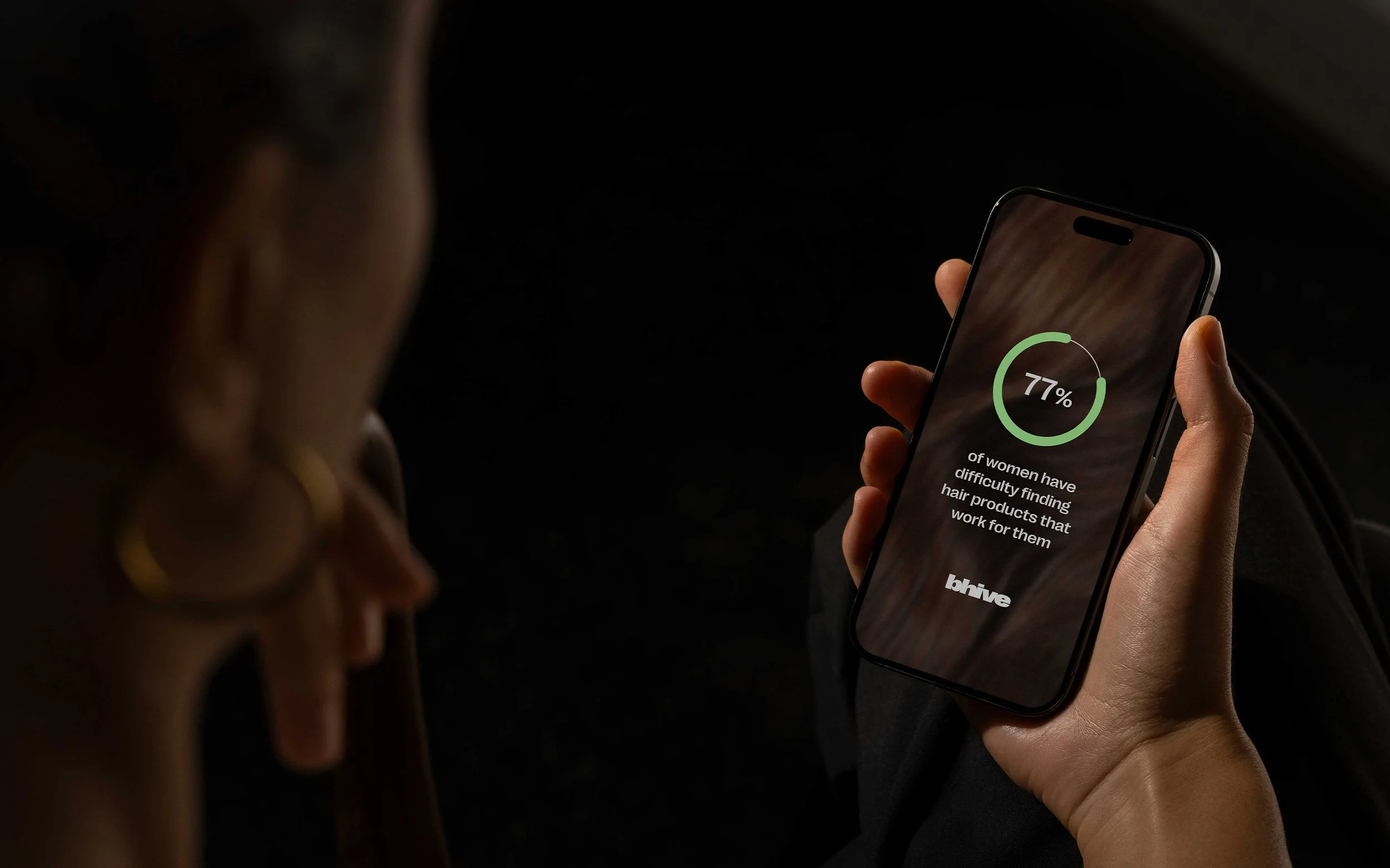
In a UK survey of 587 women, 77% reported difficulty finding hair products that worked for them.
Business problem
There was no existing product solving this problem. The business challenge was to design and launch a credible solution from scratch that users would trust, engage with, and return to, while validating the opportunity quickly with limited resources.
“I buy so many products that don’t work and waste so much money”
“Really enjoyed Bhive and Maz AI was really helpful! I shared Bhive with friends who also love it.”
“There are way too many options, I have no idea what’s going to work for me.”
Approach & rationale
My design approach prioritised clarity and speed to value across the entire experience. From the onboarding quiz, through to recommendations, AI chat, and purchase. Each part was designed to help users move forward with confidence, understand where recommendations came from, and get to useful outcomes quickly, without unnecessary friction or decision fatigue.
The main constraints were time and the amount of data we had access to cearly on. To manage this, I reduced the scope from a multi-product catalogue to a single hero category, shampoo. I also deferred features like barcode scanning and user-submitted reviews which allowed us to ship quickly, learn from real behaviour, and validate what to build next.
Research
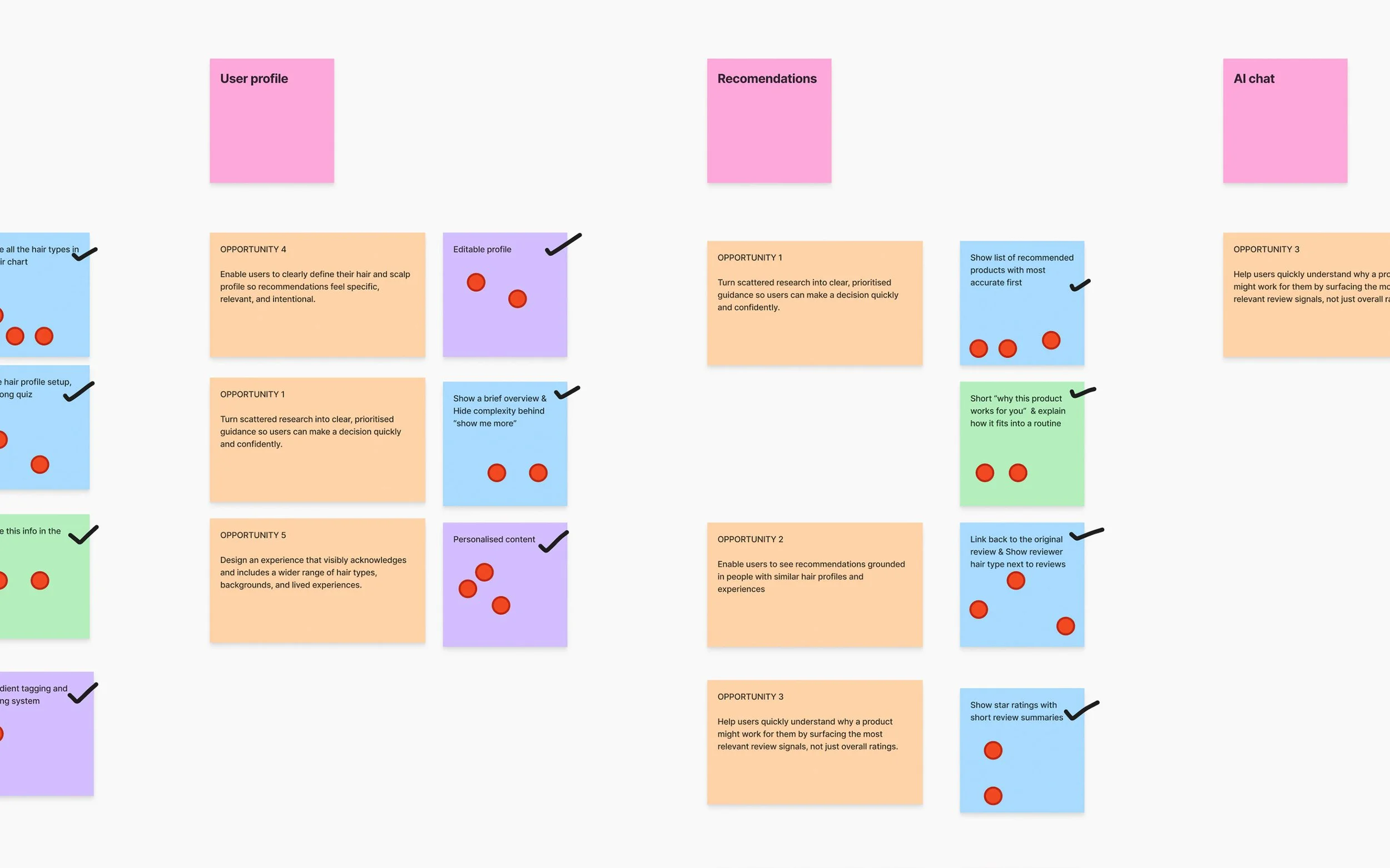
I ran surveys, interviews, and competitor analysis to understand how users currently choose haircare products and where they felt stuck. I clustered findings into themes, translated these into opportunity areas, and ran a prioritisation workshop with the engineer and CEO.
This process clarified the core focus for Bhive v1: a simple hair profile, recommendations with clear rationale, optional AI support to build confidence, and representation designed into every touchpoint.
Research led design principles
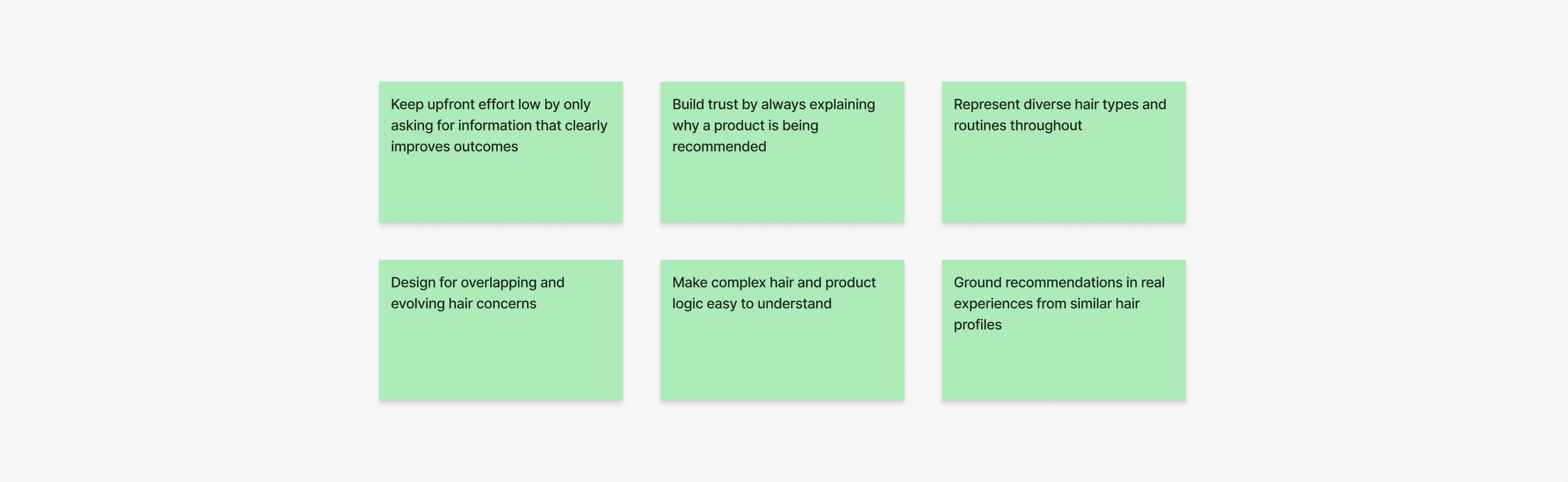
I distilled the research into a small set of design principles to guide product decisions, helping turn user needs into clear focus areas and constraints as Bhive moved into execution.
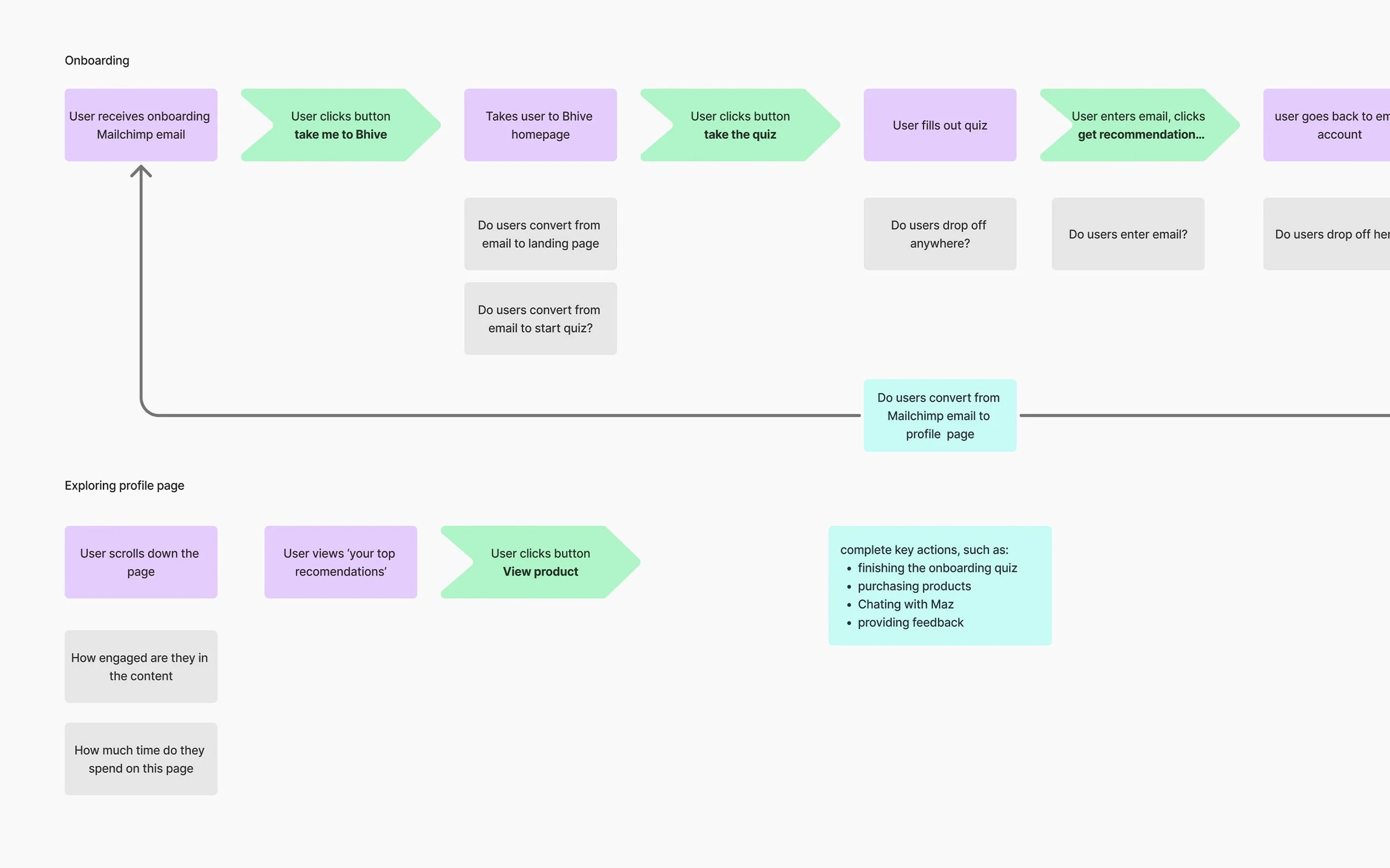
Behavioural funnel research
I mapped the top level onboarding and activation flow to decide what needed to be tracked and where the design may need to change if users dropped off or got confused.
Design
Early design exploration & user testing
I ran user testing with 6 users on early designs. Below is some of the feedback and how it informed the final design:
Users struggled to identify their hair type, so I used photography and illustrations to improve this experience.
The long list of hair concerns felt overwhelming, so I switched to selectable pills for faster scanning.
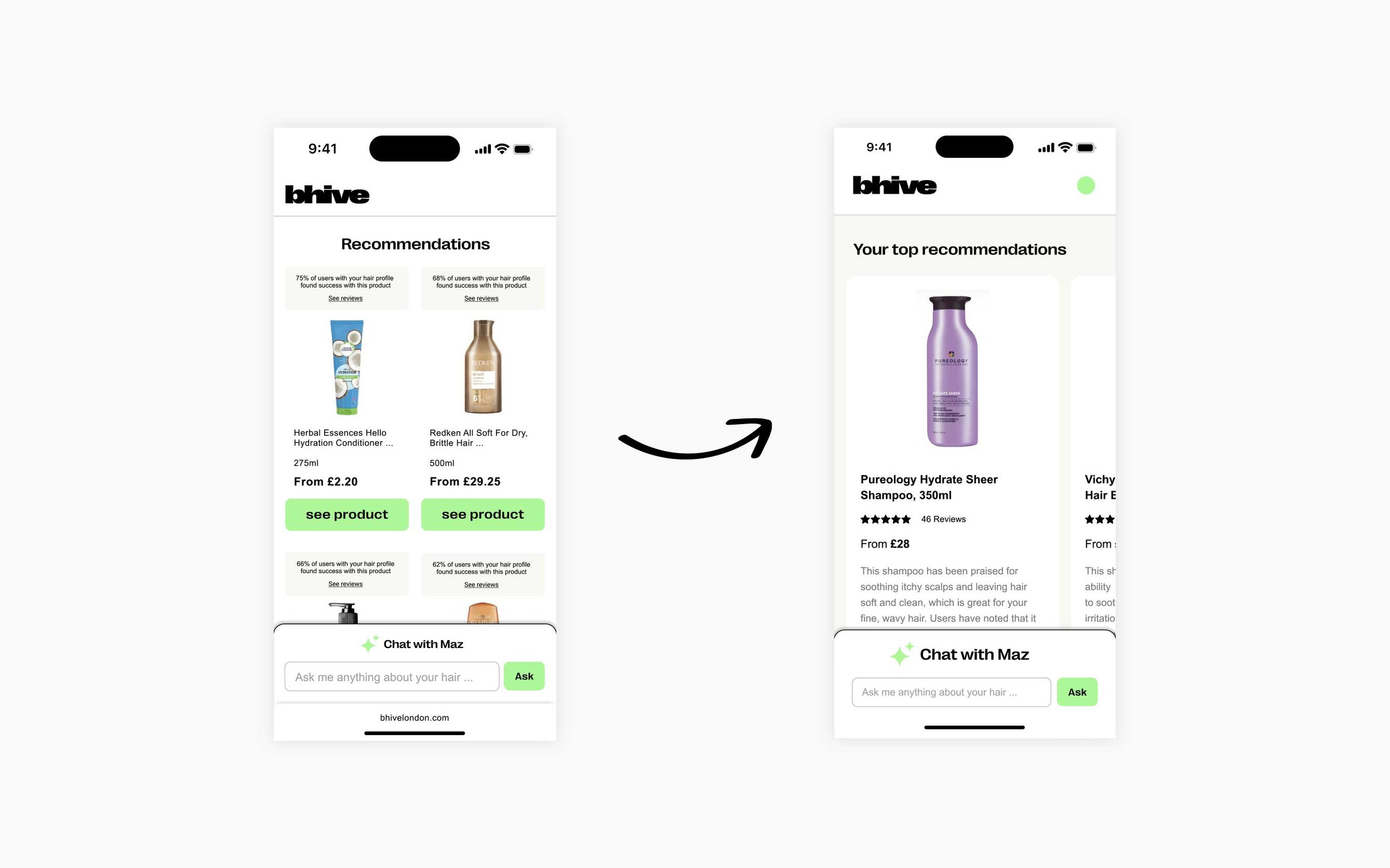
Too many recommendations slowed decisions, so I reduced the set to three in a horizontal card list.
Recommendation reasoning felt generic, which led to a redesign of product cards to better reflect the user’s profile
Users weren’t sure what to ask Maz the AI chat, so I added example prompts to guide them.
Final Designs
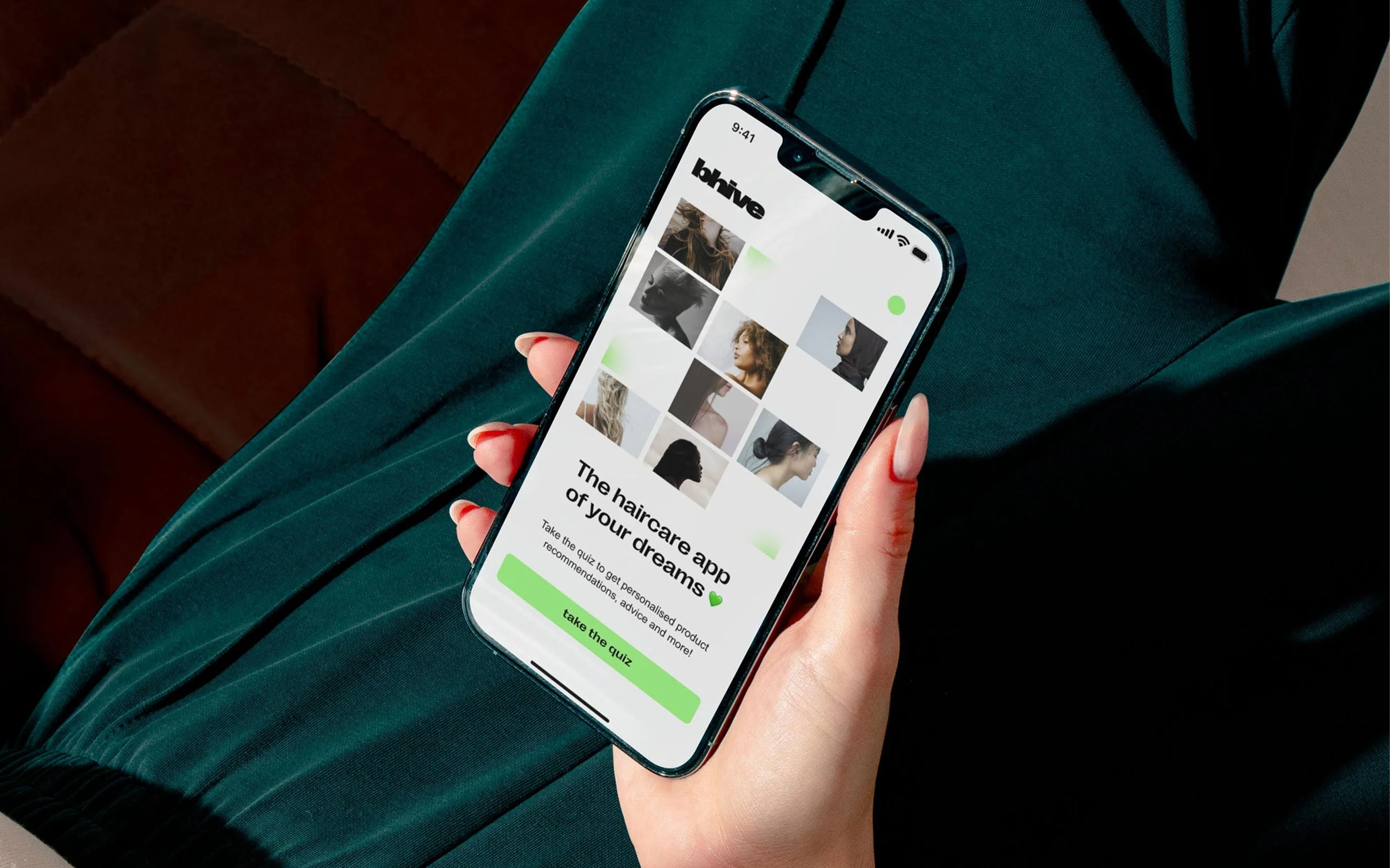
I designed the end-to-end experience across the onboarding quiz, user profile, recommendations, and AI chat, exploring different ways to guide users toward a confident product choice before converging on a simple, structured journey.
Design decisions prioritised clarity, transparency, and helping users understand why each recommendation was relevant to them.
Quiz design decisions
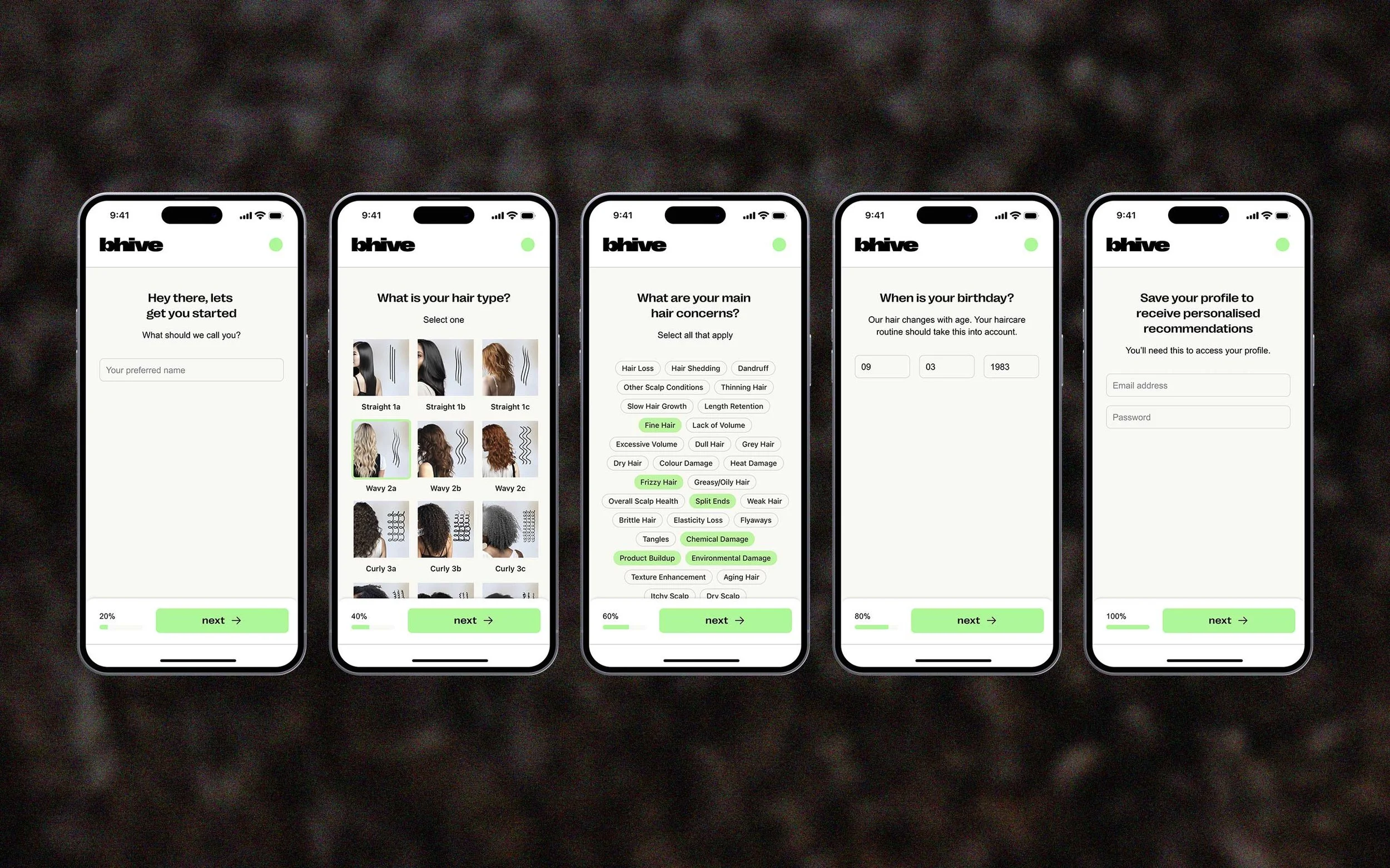
Designed as a short, 5-step flow to minimise cognitive load while capturing the key inputs needed for meaningful recommendations.
Used a combination of photography, illustration, and standard hair-type naming conventions to make it as clear as possible for users to accurately identify their hair type.
Allowed multiple hair concerns to be selected so users weren’t forced to pick a single hair “problem” and would get better recommendations.
User profile & recommendations
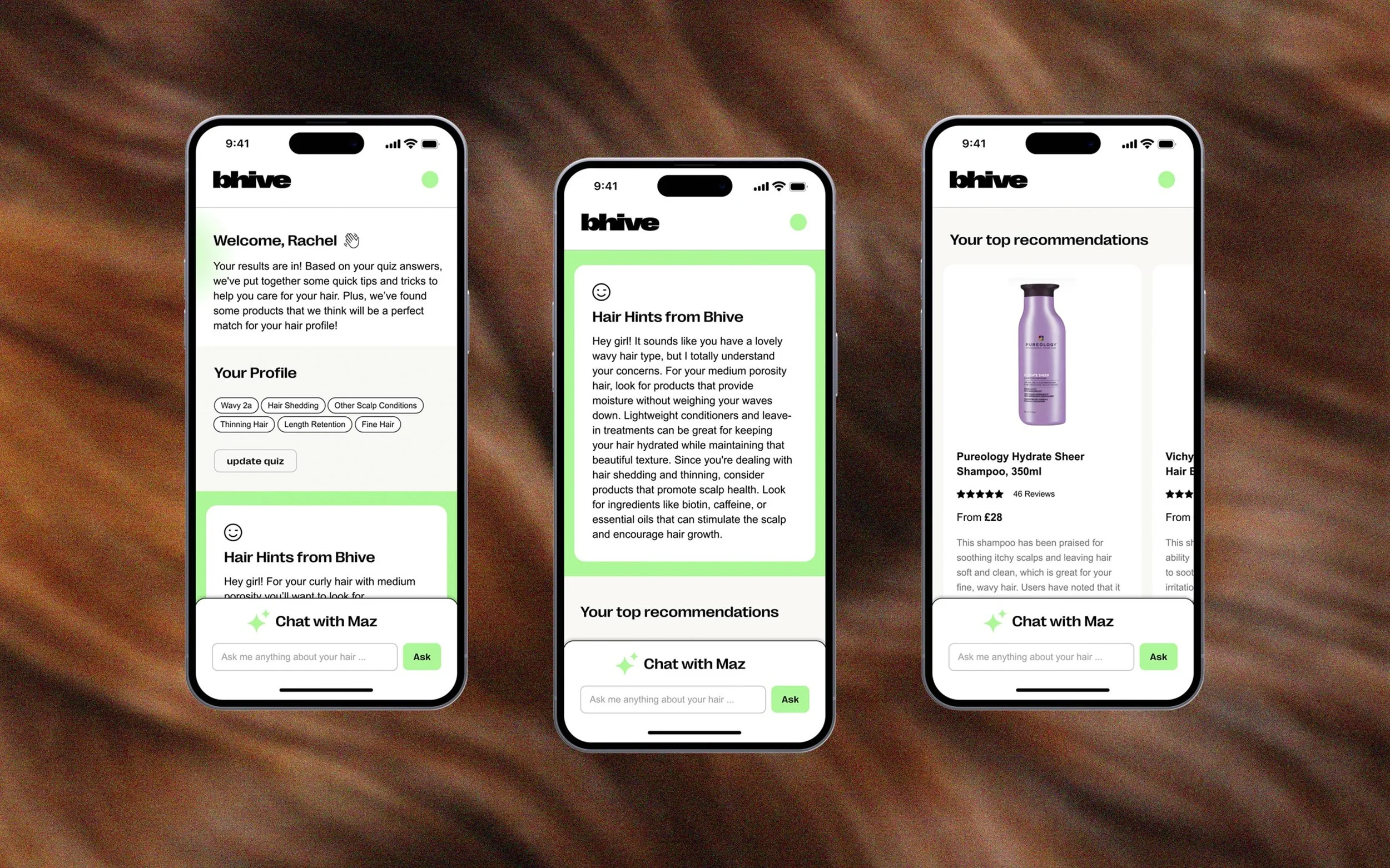
Reflected the user’s inputs back to them upfront with a short, personalised hair hint to establish relevance and trust.
Constrained recommendations to a small, prioritised set to reduce overwhelm and support confident decisions.
Revealed additional recommendations progressively (horizontal scroll) to keep the experience lightweight while still offering choice.
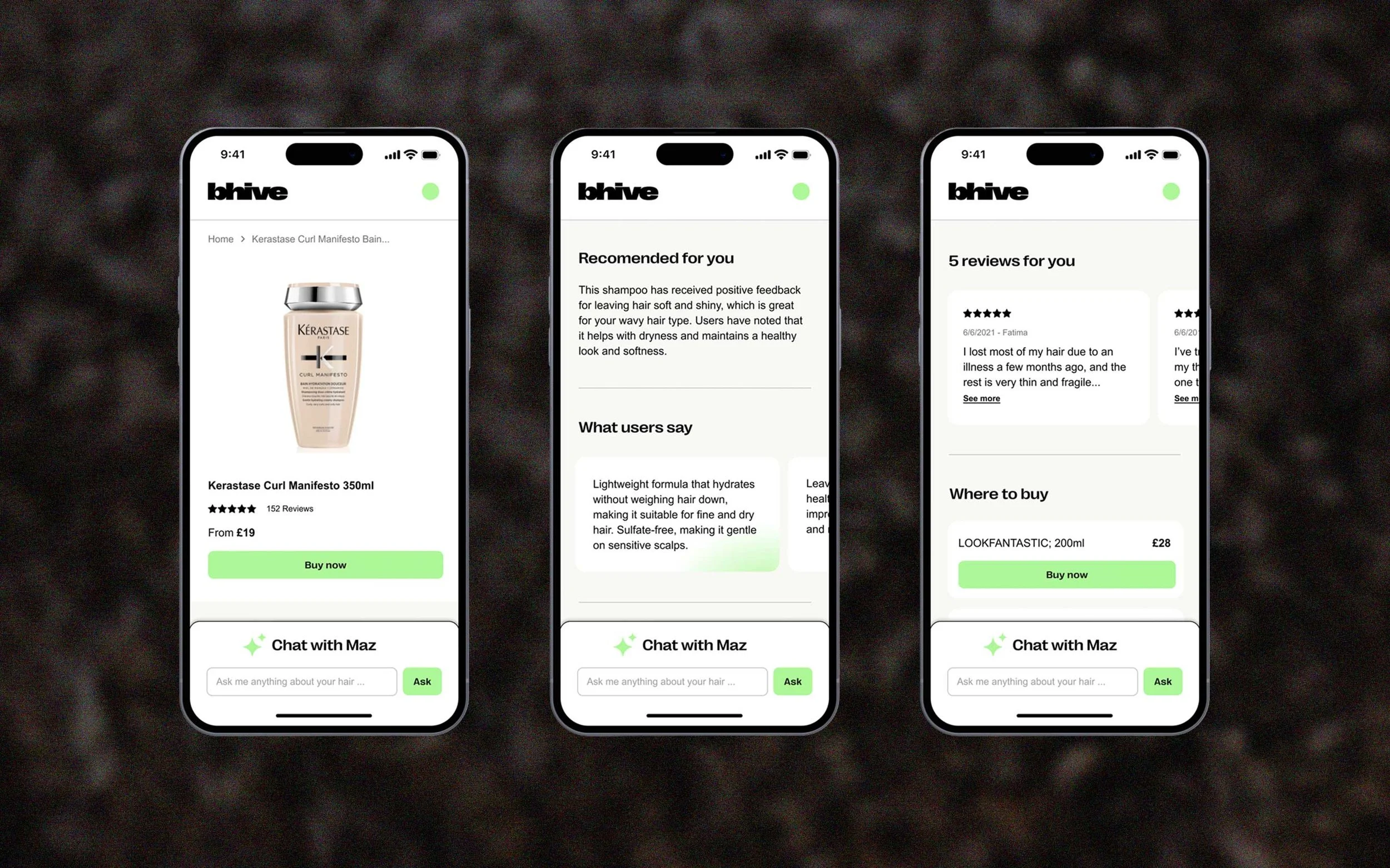
Recommended product detail
Started with a short “why this works for you” summary so the recommendation is instantly understandable.
Designed ‘What users say’ and ‘Reviews’ as swipeable cards to keep the page lightweight and scannable while still adding credibility.
Placed purchase CTAs at both entry and exit points to support fast and considered decision-making.
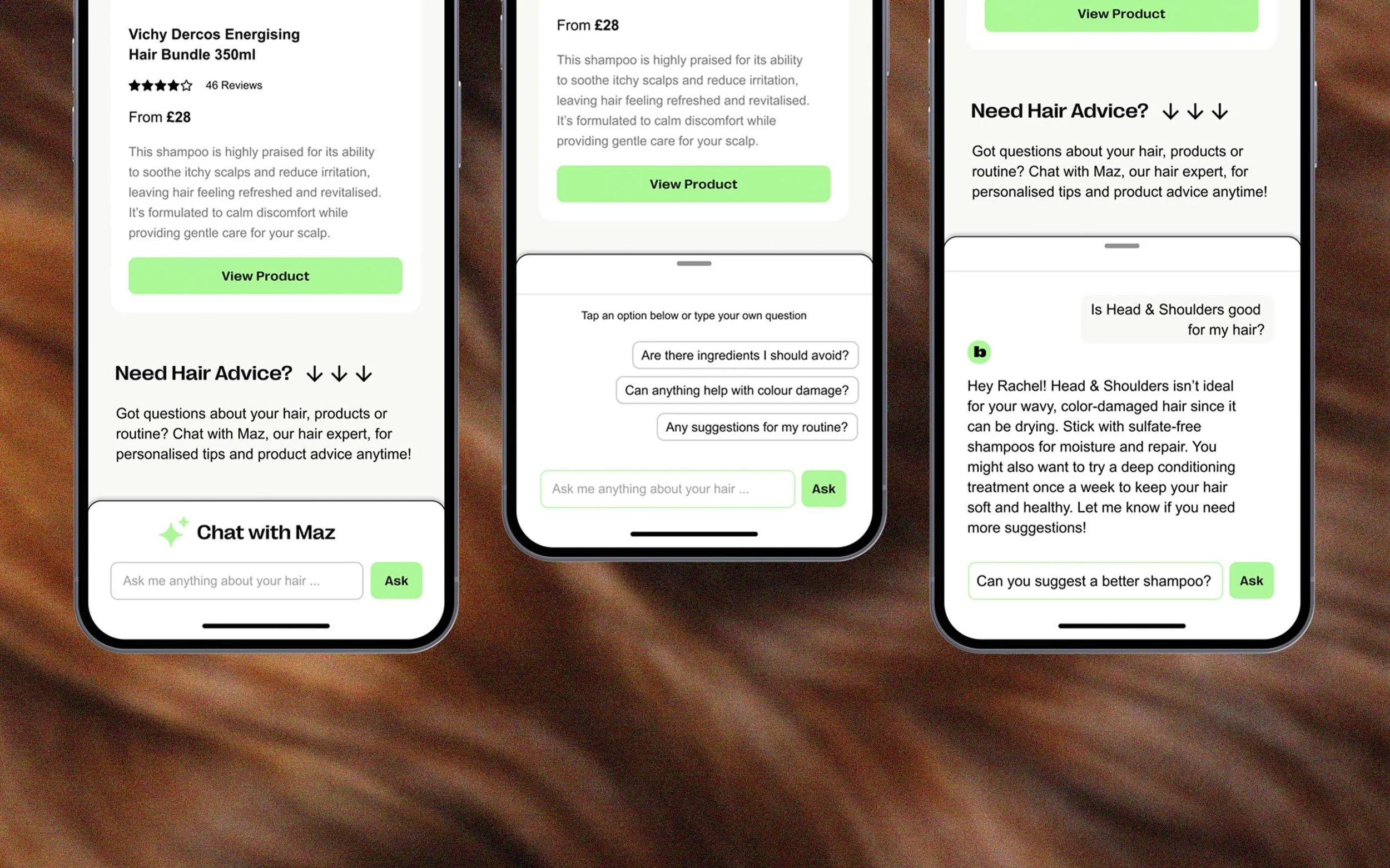
Maz AI hair expert chat
Made Maz available across the product, but placed the at the footer so it didn’t disrupt the main flow.
Made it optional and not a required step, so users could dip in only when they wanted to.
Started the chat with example questions to avoid a blank state and show what Maz is useful for.
Used a familiar chat pattern so it felt intuitive and low-effort to use.
Impact
Bhive launched with strong early traction, validating a genuine user need and de-risking the product direction.
User impact
73% return rate
12 minutes average time spent in-app
9.3/10 average recommendation rating
Consistent qualitative feedback describing the experience as intuitive and genuinely helpful
“The app is so nice and simple to use. The quiz was quick and Maz actually understood my hair””
“I spend ages reading reviews to see if its going to work on my hair”
“Finding truly personalised solutions is what it’s all about. We’d love to partner with you”
Business impact
Early weekly user growth of 23%
High engagement across both product recommendations and AI chat
Generated inbound interest from major beauty and retail brands, including Boots, M&S, Dyson, and Revlon
The product was revenue-generating from launch via affiliate links, validating commercial viability alongside strong user engagement.
These signals confirmed strong user demand and highlighted the potential for a B2B offering built around the insights generated, shaping the next phase of the product.
Reflection
This project helped me realise that personalisation isn’t just about speed or accuracy. It’s a design problem about what evidence builds trust, how confidence is formed, and when information helps versus overwhelms.
If I had more time…
Test the experience with a wider range of age groups to understand how well it works beyond the core early audience.
Run deeper exploration around Maz’s discoverability to understand where AI support feels most natural and easy to find.
My key learnings:
Designing with constraint created clarity
Reducing choice helped users decide with confidence and reduce overwhelmAI use needs guidance
AI is still unfamiliar to many people, so clear prompts and context helped massively.Make reasoning visible
Users trusted recommendations more when they could see why they applied to them.